- Client
- BDGM
- Service
- Virtual tour
- Location
- Civil orphanage Amsterdam
Architect Aldo van Eyck’s Amsterdam Orphanage is a building that cannot be explained in a single photograph. For BDGM, we created a virtual tour that lets visitors explore its pavilions, corridors and communal spaces for themselves.
Architecture you understand by looking around
Aldo van Eyck designed the Amsterdam Orphanage in 1960. The building consists of low pavilions, courtyards and routes that offer changing views of the surroundings. Architects and enthusiasts from the Netherlands and abroad still visit the building.
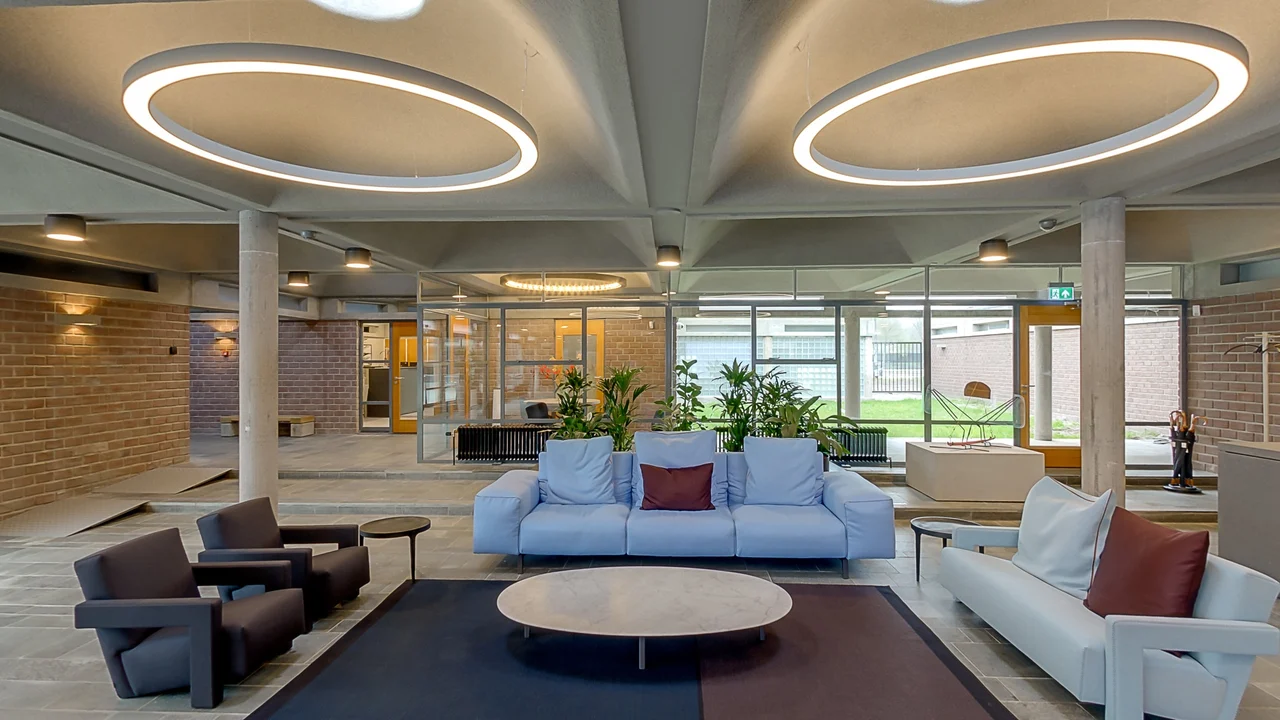
A virtual tour works particularly well in a place like this. Visitors choose where to look and how quickly to move through the building. From reception, they can continue to the pavilions, meeting rooms, corridors, restaurant and entrance courtyard.
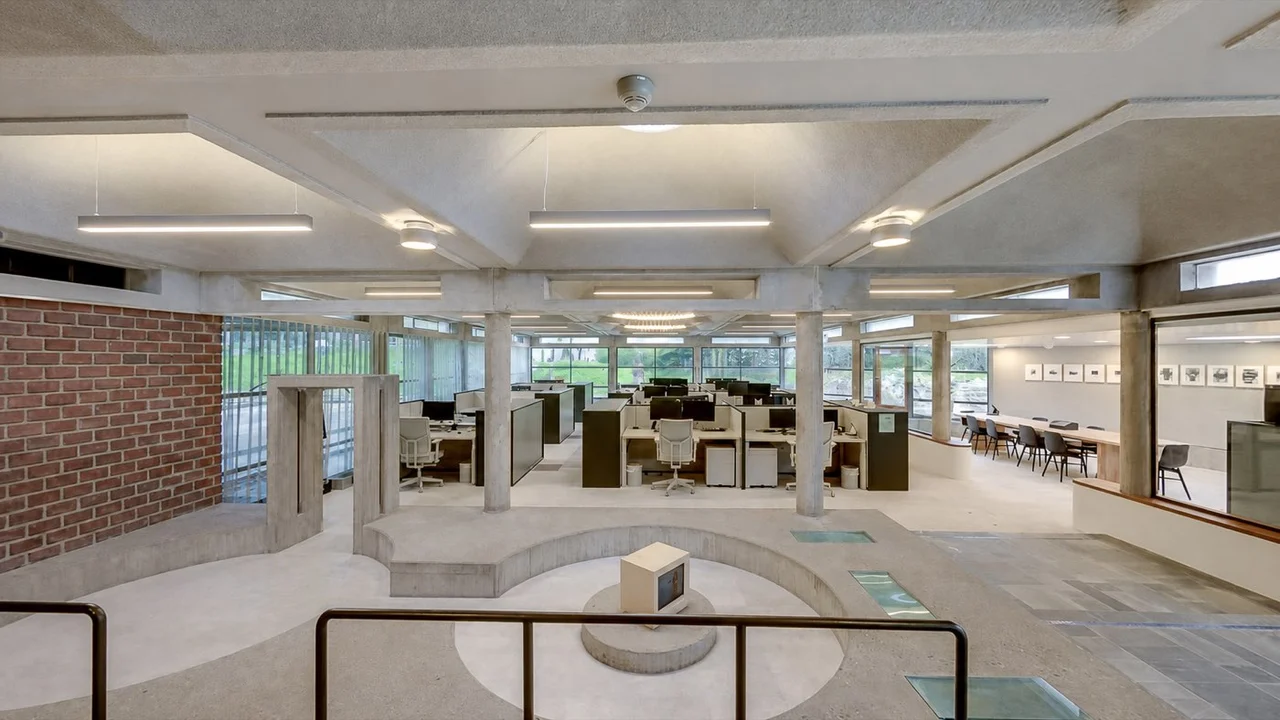
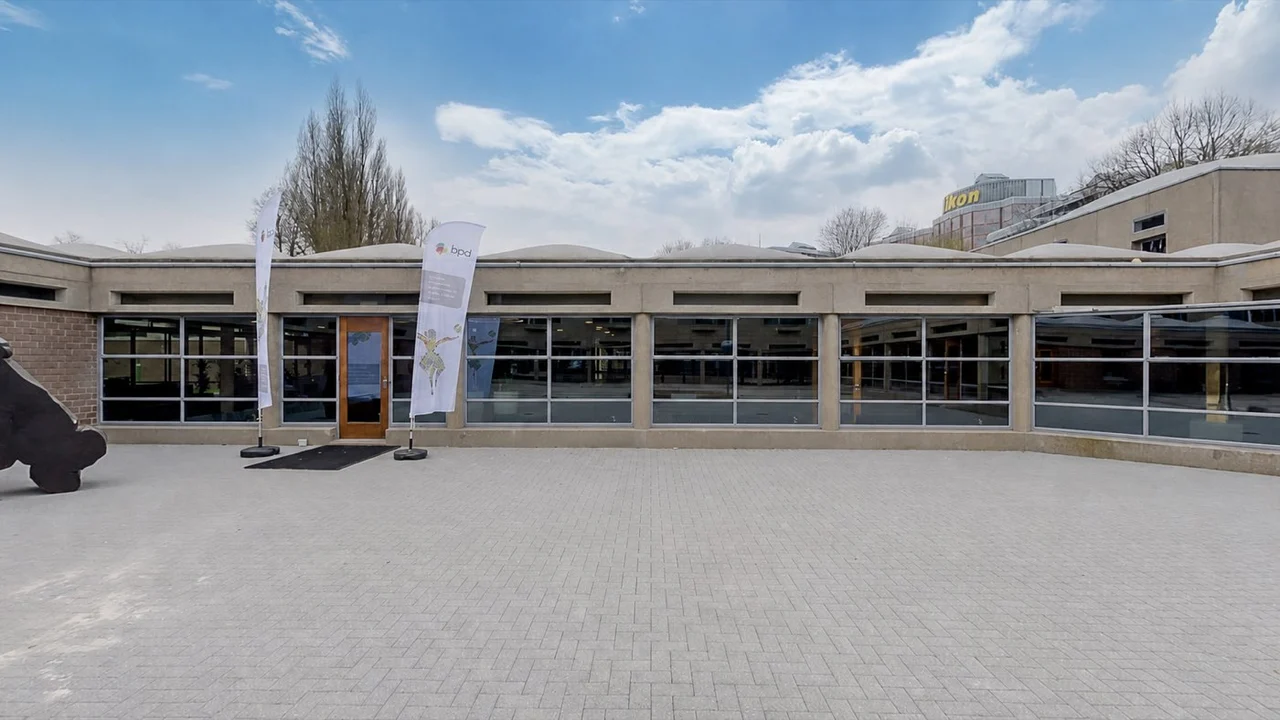
From the entrance courtyard to the heart of the building
The tour goes far beyond the familiar exterior. Inside, visitors see how concrete, brick, daylight and low passageways work together. Circular and square forms recur throughout the building. Changes in level and views through adjoining spaces become clearer as visitors move from one viewpoint to the next.
The menu takes visitors straight to a room. Those who prefer to explore at their own pace can simply follow the route. This makes the tour useful as a first introduction and for people who want to study the architecture in more detail.
360-degree photography on location
We photographed the Amsterdam Orphanage at several points, indoors and outdoors, then connected the images into one easy-to-follow tour. It opens through a regular link on a computer, tablet or phone.
The tour records a detailed view of the building and makes this distinctive place accessible to people who cannot travel to Amsterdam themselves.
Why this approach works
- Pavilions, courtyards and corridors can be viewed in relation to one another.
- You choose your route through the concrete, brickwork and recurring circular forms.
- The architecture can be explored without travelling to Amsterdam.
Understand the architecture by moving through it
The views through the building and transitions between spaces reveal much about the Burgerweeshuis. The tour preserves those connections, from the entrance square to the rooms further inside.